The Genealogy of Abandonment and The Adoption
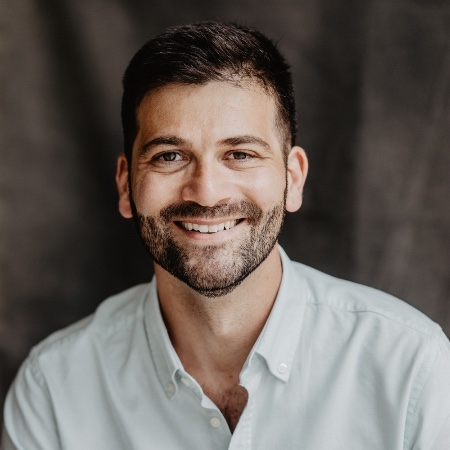
The Genealogy of Abandonment explores how unresolved family histories, absences, and inherited silences shape generational trauma, specifically in adoptees. It is a concept developed and explored by writer and adoptee rights advocate Iván Gastañaga
The Genealogy of Abandonment and The Adoption
(Article published previously and originally in the Spanish magazine: Jot Down, 2024. Translated into English)
Nearly two decades have passed since I decided to search for my biological family in Russia. When I began this undertaking, the internet arrived at my parents' house with a sound more reminiscent of a UFO than of new technology. There were, of course, no social media for finding people, no automatic translators, and certainly no widespread access to DNA testing. I started by rereading Soviet-era documents, learning the Russian alphabet, and searching through encyclopedia maps of Moscow. Any letter or symbol served as a clue. Or so I believed at the time. Like many adoptees, I felt the call of blood; that is, I wanted at all costs to know whom I resembled, where I had been born, and what had happened to my biological parents.
In 1990, Aleksandr Solzhenitsyn wrote in Rebuilding Russia: "We have forced our women to perform the hardest labour, we have separated them from their children, we have allowed those children to become sick, abandoned in their state of barbarism and false hope, in our country normal families have ceased to exist." Solzhenitsyn was absolutely right because being born in the Soviet Union into a family marginalized from society while the country was falling apart increased the likelihood of ending up in the crib of an orphanage awaiting adoption, if one was lucky. That was precisely what I wanted to discover: whether my family had been "normal" (irony) or not.
Being born with a visible illness carried a stigma that forced thousands of mothers to place their children in the care of social services because they were unable to care for them within the family. Moreover, it was not uncommon for Soviets to try to pass off children born after Chernobyl to affluent foreign couples ready to hand over bundles of dollars to the appropriate official. The Soviet Union's official currency disappeared, but so did social services, much like ambulances. Poverty emerged with tremendous force, striking those who had only the bare essentials and whose social aspirations extended no further than the opposite sidewalk on their street. It was the era of endless queues and widespread disillusionment; nobody knew anything.
In Moscow at that time, some orphanages were pleasant places, with greater resources and more political attention. Although I have always thought that their good reputation may have had more to do with Soviet propaganda aimed at foreign audiences. The goal was to showcase orphanages decorated with bright colours and cartoon animals instead of the miserable institutions hidden deeper within Russia. I was fortunate enough to be born in the capital of the USSR, a distinction that today might be considered hostile, but at least it allowed me to survive.
Doctors commonly recommended abandoning babies with defects, motivated by the desire to build a "new Soviet man." Rubén Gallego recalls this vividly in his book White on Black, where he recounts his hardships as a person with disabilities moving from orphanage to orphanage. In 1991, the communist world officially collapsed, and many of its internal failures came to light, among them the countless orphans.
Soldiers lost in wars, bodies that remain at sea after shipwrecks, or girls kidnapped on their way to a supposedly "better" country never truly rest, nor do their relatives. I have found similarities between people searching for the missing and those searching for biological relatives, despite having no memories of them and no shared life experiences. Some suffer from the loss of a bond; others, like us, suffer from being uprooted from our family bond. There is no mourning process to begin, no body to grieve.
Adoptees can feel this pain when curiosity seeps into every pore, when the information we possess about who we once were occupies only a quarter of a worn, deteriorating page. We lack a birth narrative. We grow up without hearing the founding myths of the families that gave us life, and many times we end our lives as we began them: blind.
The philosopher Epicurus wrote in his Principal Doctrines that "pain does not dwell continuously in the flesh. Extreme pain is present only for a very brief time, and pain that only slightly exceeds bodily pleasure lasts no more than a few days. Chronic illness, on the other hand, provides the body with more pleasure than pain."
There are times when the relentless search for truth, despite the pain it causes and despite the burden that ignorance places on our ability to move forward, produces a certain pleasure. This is because we always retain some hope of finding the missing or the unknown. The task is not to fill ourselves with light, but to draw out the darkness within us so that we can search healthily and reconcile ourselves with our immediate or direct ancestors.
In Why Be Happy When You Could Be Normal?, Jeanette Winterson, writing about her disastrous relationship with her adoptive family, says: "Adoption is being outside. You enact what it feels like to be the one who does not belong." Winterson speaks about the universality of adoption through the enormous differences and distances between adoptees and their adoptive families. We do not physically resemble them, we do not walk the same way, and our voices are different.
When we look through a family photo album, we must pretend to play along with the game of identifying who is who. We cannot point to faces that look like ours. Every day, we must make an effort to fit in, while our thoughts simultaneously carry us to mysterious places, making us wonder about our biological family. Did I inherit my eyebrows from my father? Is my calm temperament something I got from my maternal grandmother?
Stories of adoptees who successfully find their biological families are not common in bookstores, partly because adoption remains taboo. For years, it was a stigma for parents who could not conceive. It was also a stigma for us, the non-biological children who were expected to keep the secret. And it was a stigma for social services, which never concerned themselves with following up on our integration into society. If, to this mixture, we add the cases of babies stolen from the time of the Spanish Civil War well into the 1990s by hospitals, public officials, and religious institutions, we end up with c
That is why it is essential to begin searching. This is the time for the voices of the children. The experiences of the parents no longer suffice; they are not valid for explaining either adoption or the search for origins because they remove from the playing field the adoptee's right to know their origins.
What is a person looking for when they search?
People who are not adopted usually know, with greater or lesser accuracy, some scandalous detail about their ancestors, a comic adventure repeated a thousand times, or a romance hidden during the postwar years. All of these stories become part of the family's identity, regardless of where they live or what surnames they bear. They share a common past and experience. Sometimes silence reigns, and it is then that the mind runs wild. For adoptees, filling that void becomes a long-distance race, but not all of us are searching for the same thing.
Recently, I heard the story of an adoptee whose life appeared perfectly ordinary and who became a butcher. One day at school, a teacher told him, "We're not going to let you get away with everything just because you're adopted." Something inside him shattered. Those words penetrated to the marrow, forcing him, in front of everyone, to confront a condition that until then had never made him feel so miserable and separated from his clan. The public humiliation collided with his feelings of abandonment, and later, schizophrenia plunged him into darkness for several years until knives, bovine and porcine anatomy, and serving customers ultimately saved his life.
The Parisian butchers' guild to which he belonged became a new family for him, a recognition that he was part of a tribe, with its hierarchy and rules. Dismembering animals, slicing organs, staining his hands with blood, that was how he overcame that infamous comment. What he had been searching for was the comfort of belonging to a group of peers.
Other people pursue a genealogical search. They want to know every single ancestor who makes up their family tree. At some point, we all imagine that perhaps we are descended from noble Castilian warriors or 1980s pop divas. Reality eventually intervenes. When we try to reconstruct what happened to our families, language and cultural barriers become an insurmountable wall. How do you ask about your grandparents? How do you prepare yourself for a painful answer?
For example, I discovered an unusual behavioural pattern in my family tree. A feeling that had seized every generation and been passed down through family history like a disease: the sensation of abandonment and uprootedness, a Genealogy of Abandonment.
After twenty years of family research, I realized there had been a series of ruptures and landslides that scattered my family in every direction, fleeing, escaping, and losing all connection with their place of origin. This endless race reached me as well, leading me to live in more than twelve cities and attempt to rebuild my life in five different countries over the past ten years.
Over years of archival work, I uncovered and documented a series of events that explain this genealogy of abandonment. On my mother's side, I found two great-grandparents who were victims of Soviet terror, interfaith marriages that ended in tragedy, and Greek immigrants who left behind a culture very different from Russian culture, which has since disappeared. On my father's side, I recovered on paper the stories of survivors of the Armenian Genocide of 1915, great-grandparents who disappeared during the Second World Ward War, an adopted grandfather, and a tremendous list of widows and orphans.
I believe all these experiences influenced my parents' decision to place me for adoption. By analysing their lives, I came to understand that my parents had been lonely and unhappy for decades and that it may have been emotionally impossible for them to form a bond with a child, as well as with others who also grew up without their presence. The inherited uprootedness and inability to build healthy families within their own family environments may have led them to do something very similar. Or perhaps they were giving me a chance to survive far away from them.
This explanation, however, allows me to begin a conversation with them and with their ancestors from a position of understanding and compassion. All of that stain, leaving behind a trail of uprootedness and lack of affection, tattoos the family with skin as hard as marble, yet capable of shattering at any moment.
Reconstructing a family tree requires learning how to ask questions with great subtlety and gathering clues as though they were a trail of breadcrumbs, rather than surrendering to frustration when little information can be found. It is not enough to record names and birth dates. One must look from above and understand the voids within our families so that they can once again be filled with life and healthy family relationships, free from the trauma of abandonment.
The land of our relatives, the photographs they may show us in family albums, and their memories all form part of the tapestry of our biological family. The mere attempt to make that tapestry our own is a revolution in itself. By right of belonging, nothing belongs to us, nor do we belong to anyone unless there is a genuine willingness on all sides to build bridges, even if those bridges are made of materials as fragile as silk.
DNA provides infallible results about our ethnicity and is also an extraordinarily powerful way of discovering distant relatives who may gradually lead us toward family members we have in common. There are already hundreds of cases of adoptees who have reunited with parents or siblings after decades of searching.
But it has also been proven that DNA is not everything, because in the search for origins the only thing that truly matters is the willingness to rebuild a relationship, just as in all human relationships. How many siblings no longer speak because of a financial dispute? How many cousins hate one another because a grandmother gave something to one and not the other? How many parents have never forgiven their children for choosing, or not choosing, a certain path?
What we must keep in mind is that mediation should always be considered. When we realise that, with a single click, we can contact a cousin or a biological parent, the world becomes very small, and one miscalculation can ruin years of searching and tension. The people being sought are often frightened because adoption remains taboo and was for many years a stigma both for the child and for the woman who relinquished them.
To avoid frightening our relatives, it is advisable to work through a mediator. A mediator can be a lawyer or a psychologist, which always costs money and is not affordable for everyone. But a mediator can also be someone we trust who helps us draft a message that is clear yet sensitive toward our relatives. That person must understand the sensitivities of adoptees and not simply be someone wrapped in academic credentials. Public services should offer free mediation for all adoptees.
When we search for our origins, we are not only searching for people. We are also searching to revive the culture of our biological families, reclaim our lost language, discover the aromas of their cooking, or even pray to a God we never knew.
When we research for our origins we are undoing, deconstructing, and resignifying adoption and the genealogy of abandonment to which we belong.
Ivan Gastañaga
Ivan was born in Moscow, Soviet Union, in 1990 and adopted by a Spanish family in august 1991. He was the first Russian baby adopted by Spanish parents. He had always known that he had birth family in Russia but later on he found out about having links in Armenia. Ivan has been a consultant for those adopted from Russia, adoptive parents and professionals for more than a decade. He runs his consulting firm.